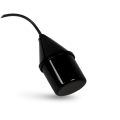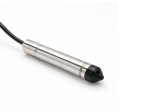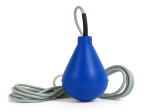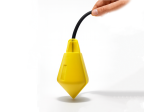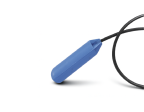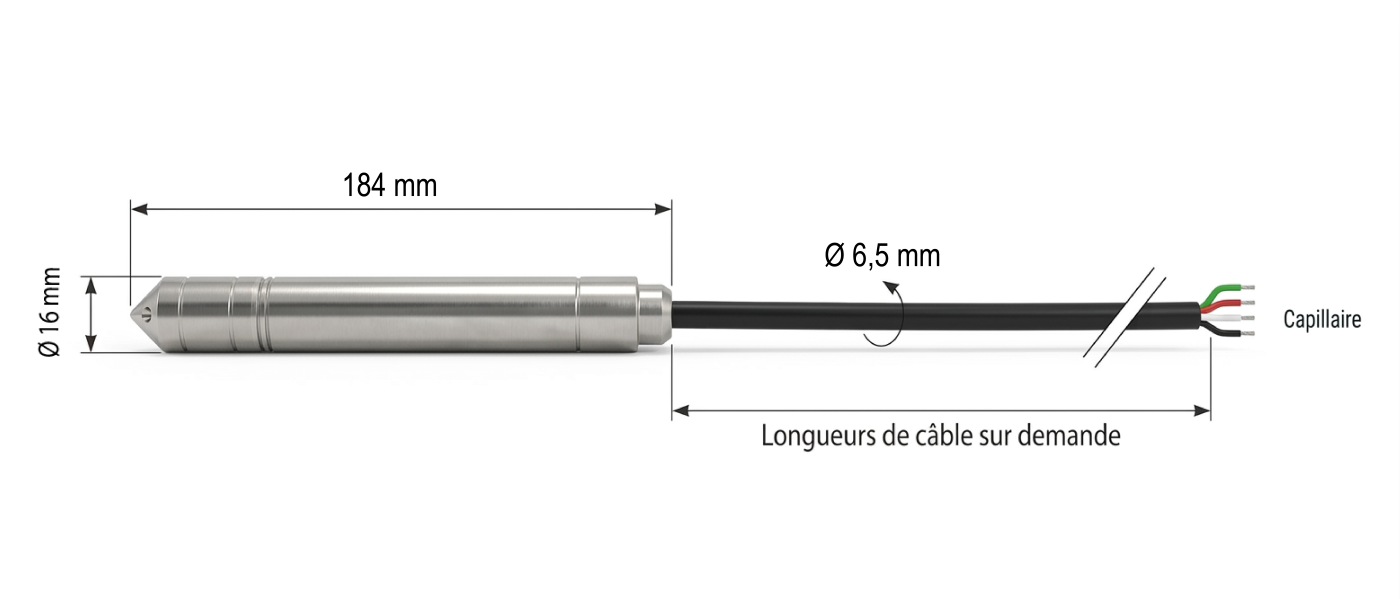
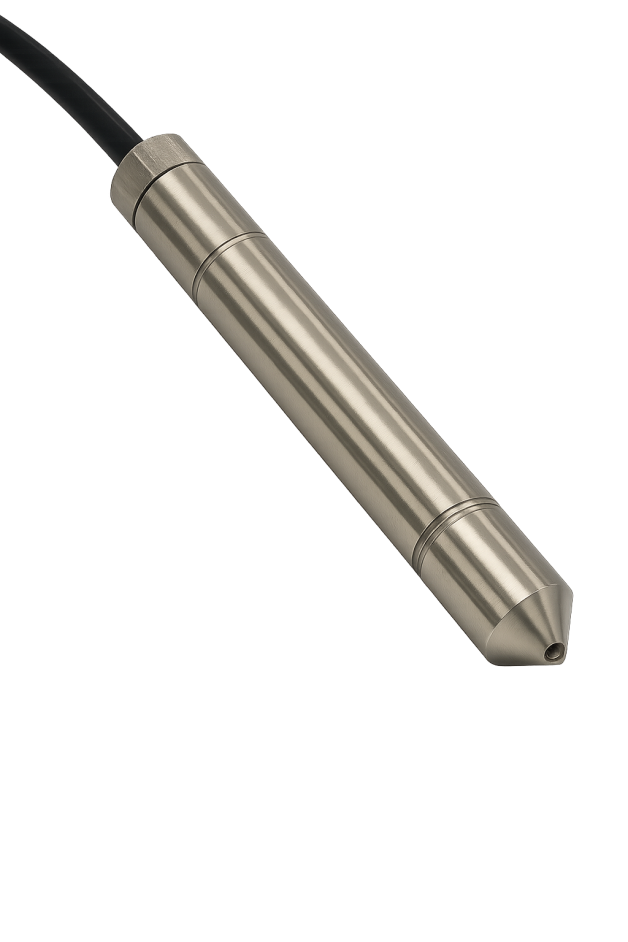
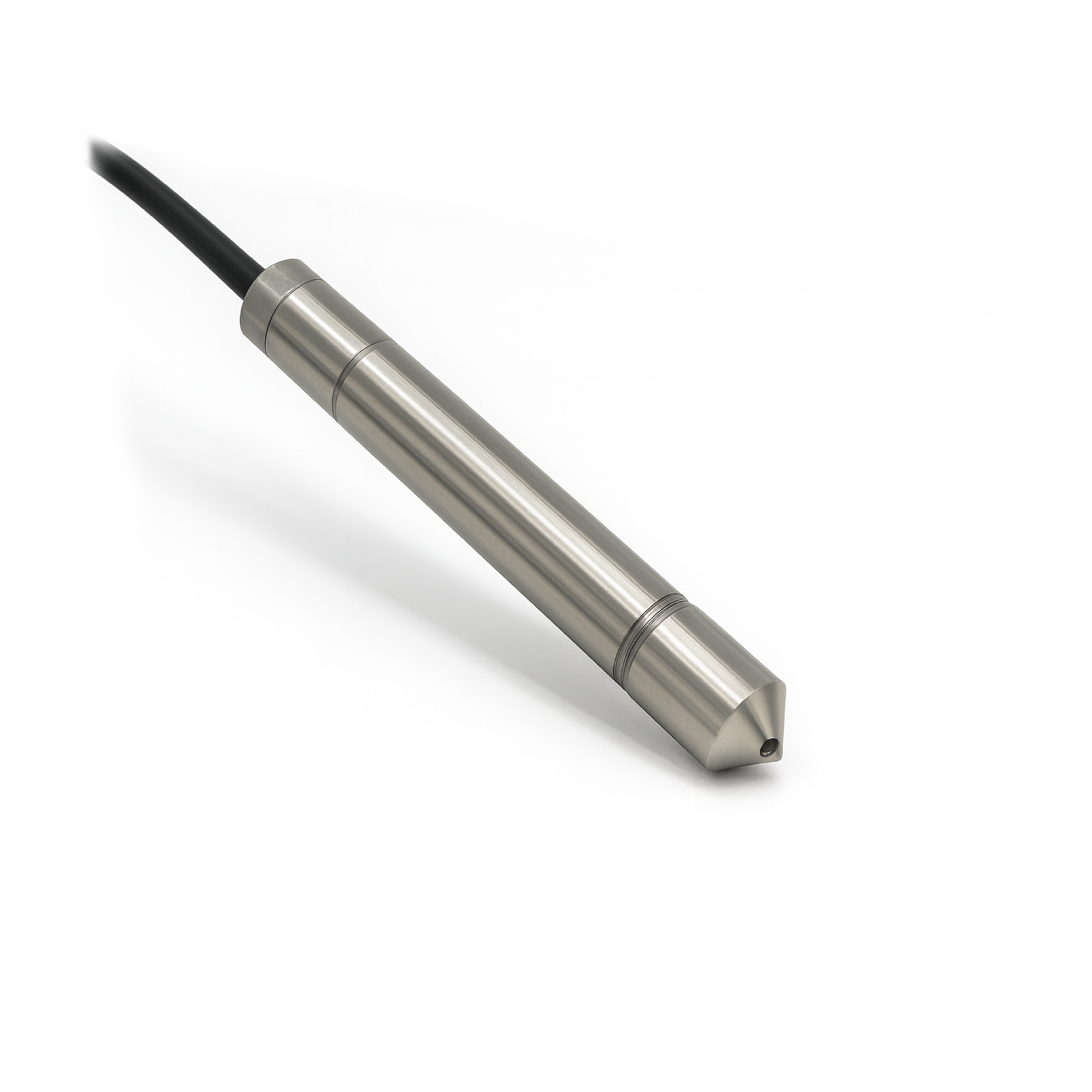
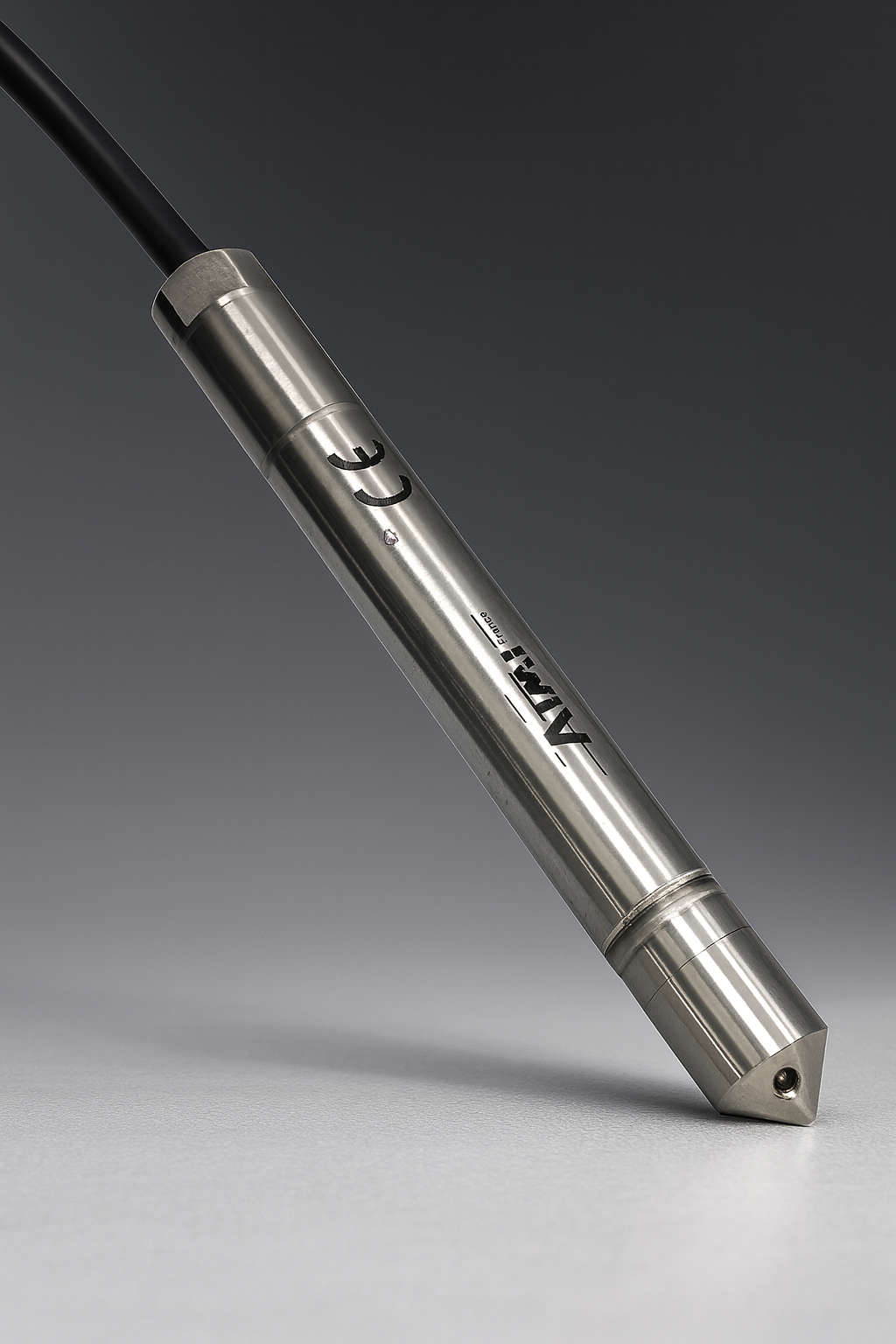
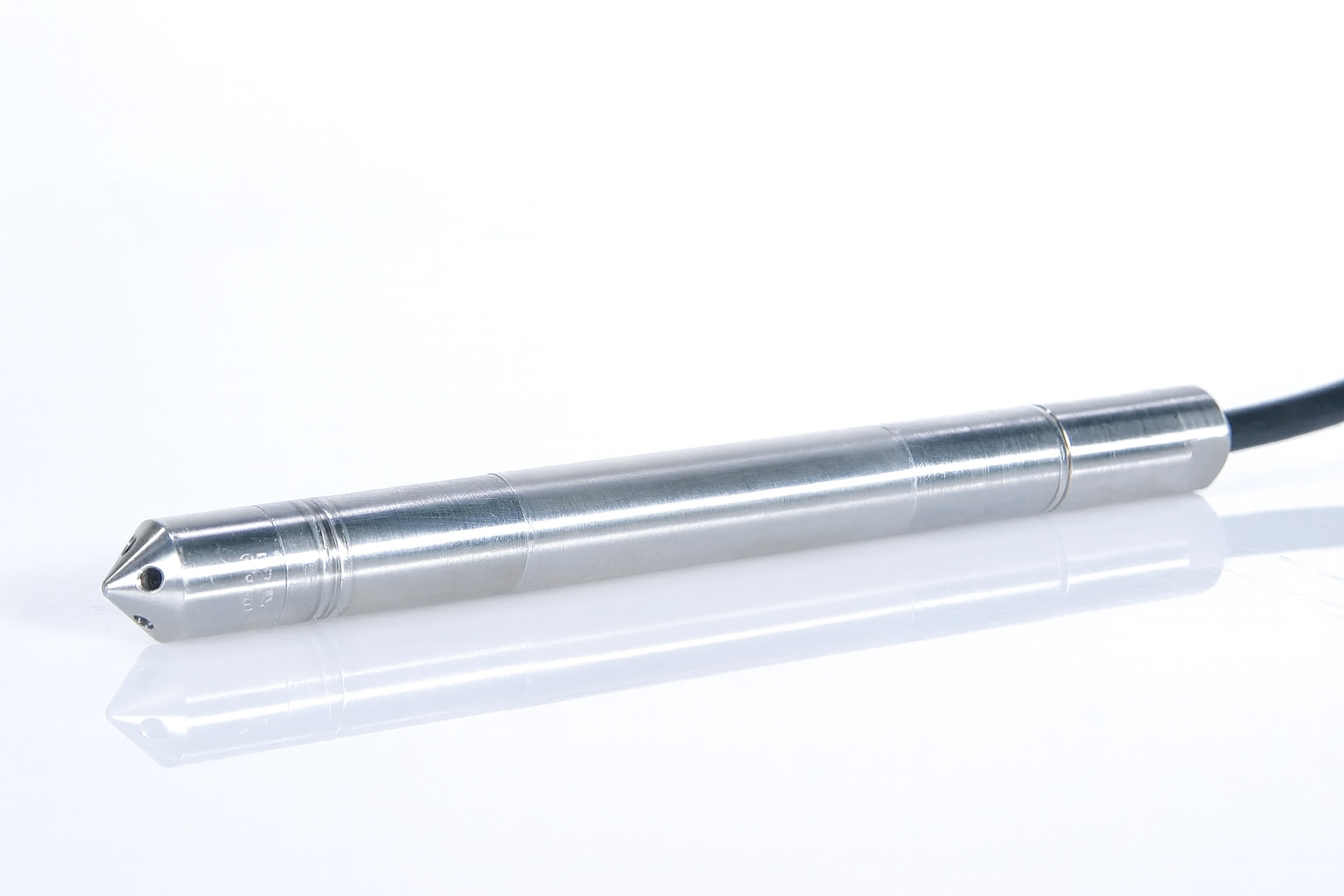
With its compact 16 mm diameter, the piezometric probe PIEZO FOR is perfectly suited for small-caliber boreholes, ensuring reliable continuous water level measurement even in confined spaces.
The piezometric probe tracks sudden water level variations and issues preventive alerts.
The piezometric probe PIEZO FOR consists of a piezoresistive sensor that measures hydrostatic pressure, which is directly proportional to water depth. Pressure data is then converted into an electrical signal by piezoresistive technology and conditioned into a 4-20mA loop.
Download this documentation and keep the most important information at your fingertips.
pdf : 268.04 KB
|
|
"Install, immerse, measure: Precision at the heart of your installations"A piezometric probe is an instrument used to measure the piezometric level of a groundwater table or reservoir, i.e. water pressure expressed as water column height, by converting the hydrostatic pressure of the water column into an electrical signal. The piezometric probe is placed at the bottom of a borehole, well or reservoir, immersed in water. The piezometric probe contains a piezoresistive sensor that measures the pressure exerted by the water column located above the probe. The piezoresistive sensor converts this pressure into an electrical signal (in mA, V or via digital communication). This signal is proportional to water height. The signal is sent to a control unit or recorder. The piezometric level is then obtained directly (relative to ground level or a reference datum).
|
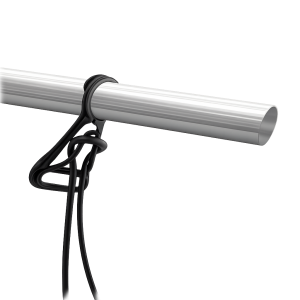
Probe mountingThe piezometric probe can be suspended via the cable sheath, using a support or the cable fixing accessory (FIXCAB), which allows proper fixing of the electrical cable at the desired height and enables precise adjustment at any time. If the piezometric probe is frequently removed or at risk of snagging, it is recommended to use a stainless steel support cable with eyelet to lift the probe. Caution when using clamps or other elements during mounting that may damage the cable and harm the device by allowing water to enter the float level switch by capillary action.
|
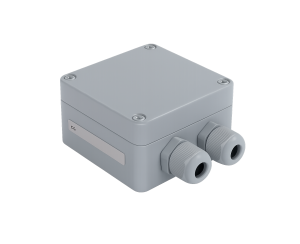
Electrical connectionThe connection must be placed in a non-airtight enclosure (internal enclosure pressure must equal atmospheric pressure), thus preventing water or other contaminants from entering the capillary. This prevents water infiltration that could compromise the safety of electrical connections and the probe's lifespan. The electrical junction box must never be placed inside the tank. The cable and its capillary can be extended using standard signal cable. We equip our float level switches with the cable length you require to avoid connections that would impair their operation.
|

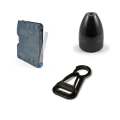
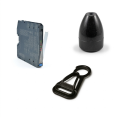
Highly recommended cable fixing accessory for all suspended floats.
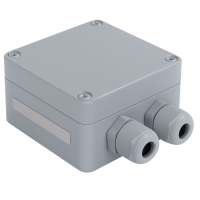
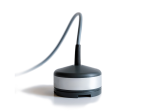
The junction box is designed for extending the hydrostatic probe's power cable with standard signal cable.
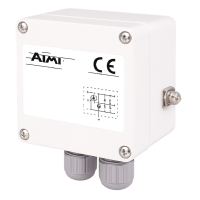
The surge arrester is designed to provide overvoltage protection for measurement transmitters and auxiliary devices.
|
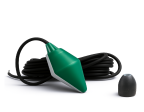
To best define the float level switch suited to your needs, ATMI offers a wide range of level switches for liquids and solids in various applications.