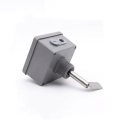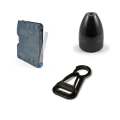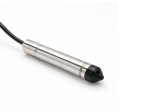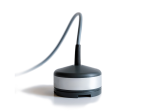

A level detector for solids enables control of the presence of bulk material in a storage installation. This information allows the operator to know if the product reaches a defined level during silo filling or use. In an industrial environment, this control plays an important role, as it limits level errors and facilitates process management.
The choice of a level detector depends on the behavior of the product to be detected. A very light material does not stress the device in the same way as a denser product, just as a free-flowing solid does not create the same constraints as a material that compacts or exerts significant pressure on the silo wall. This reality therefore requires precise analysis before any installation.
ATMI offers several technologies to meet the constraints of bulk solid products. Each level detector is based on a different operating principle. Tilt uses mechanical tilting of the device while the diaphragm reacts to pressure exerted by the product and the rotary paddle detects material when it blocks its rotation. These solutions pursue the same objective, but they are not suited to the same configurations.
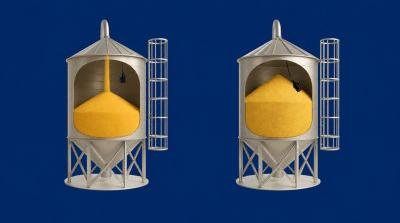
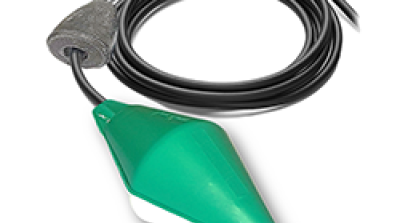
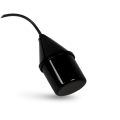
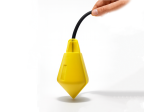
The tilt level sensor enables silo filling control through device tilting. The detector remains suspended by a cable in the control zone. When the material reaches the expected level, it pushes the device and causes its tilt. This movement triggers the electrical contact and transmits the filling stop signal.
The tilt level sensor is suitable for bulk products capable of displacing the device. This technology is used particularly with grains, cereals or certain powders. Its advantage is based on simple mechanical operation, which requires direct action of the material on the detector. The installation must therefore allow the product to touch the device at the right point and with sufficient force.
A tilt level sensor represents a relevant solution when the application requires simple and economical high level control. However, the choice of this technology must take into account the product behavior during filling. If the material forms an irregular slope or does not push the detector sufficiently, the installation must be studied carefully.
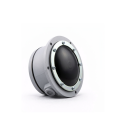
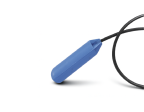
The diaphragm level detector enables control of bulk product presence through pressure exerted on a sensitive surface. When the material reaches the detection zone, it presses on the diaphragm. This pressure causes deformation which triggers the electrical contact. The detector then transmits the level information to the installation.
The diaphragm level detector is suitable for products capable of exerting sufficient pressure on the silo wall. This technology integrates directly onto the installation and operates when the material naturally comes into contact with the diaphragm. The detector positioning therefore remains essential, as the signal depends on the actual pressure exerted by the product at the chosen level.
A diaphragm level detector can be used to control a low level, high level or intermediate level. Its effectiveness depends mainly on product density and its ability to press correctly on the diaphragm. This technology provides a suitable response when the material exerts regular action against the installation wall.
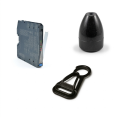
The rotary paddle level switch enables control of bulk material presence through blockage of a moving paddle. As long as the product does not reach the defined level, the paddle rotates freely. When the material comes into contact with the paddle, it blocks its rotation. The detector interprets this blockage as product presence and transmits the signal.
The rotary paddle level switch is suitable for products capable of stopping rotation without damaging the device. This technology adapts to many storage installations as it is based on a simple mechanical principle. The choice of paddle and model depends on the product to be detected, its density and the silo configuration.
The rotary paddle level switch can be used to control different level points in an installation. This solution remains relevant when the material presents sufficient resistance to block the paddle at the expected moment. However, it requires suitable selection, as a product that is too light or too compact can modify detection quality.
A level detector for solids must be chosen based on the product to be detected. Tilt technology responds to a pushing action. Diaphragm technology responds to pressure. Rotary paddle technology responds to mechanical blockage. The choice therefore depends on the actual behavior of the material in the installation.
An adequate level detector enables transmission of reliable information when the level is reached. This reliability helps the industrial operator to better control filling and reduce risks related to poorly adapted detection. ATMI supports its customers in this selection to offer a solution consistent with the product and operating conditions.
ATMI, level under control.
ATMI FRANCE