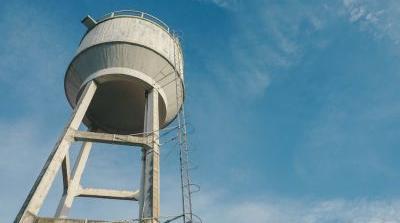

The expression 'water tower' appears in the French language in 1704 with the castellum, meaning castle in Latin. The castellum, a term inherited from the Romans, indeed refers to a reservoir fed by an aqueduct and located either at ground level or slightly elevated. Its facade was often decorated with ornaments and sculptures, giving the entire structure the appearance of a true work of art.
What about today? Water towers are mainly concrete towers serving several roles:
Water towers are structures generally located at height. They operate according to the principle of communicating vessels. Water reaches their top thanks to pumps and then flows down to homes located lower than the towers. The higher the homes are, the higher the water tower structures must be too.
They are built near water sources to reduce the cost of piping, which increases very quickly when the structure is far from these sources. For this reason a hydraulic study is conducted before any water tower establishment project to determine the suitable site. The pipes transporting water are generally buried at about 1 meter depth, to avoid damage due to frost during winter.
Water towers can contain on average between 200 and 300 cubic meters of water. There are also much larger structures, which can contain several thousand.
Before redistribution to homes, the water stored in water towers is cleaned. It is treated in a plant, filtered and purified. Chlorine is added to destroy bacteria and to ensure good water quality throughout its transport in the pipes. For this action to be effective, at least 0.1 milligram of chlorine per liter of water is needed.
In principle, water towers are cleaned once a year by drainage and tank cleaning. They are checked every week using meters, to verify that the tanks are not damaged. Over time water towers are also renovated because damage can affect all parts of the structure.
Water towers have a lifespan of about 90 years. After this period, they are generally destroyed and replaced by new structures.
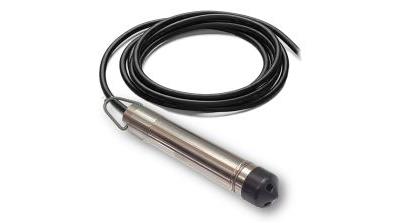
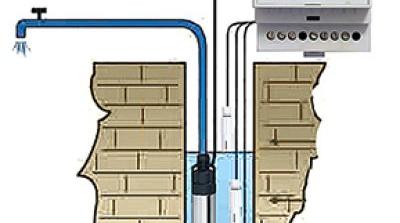
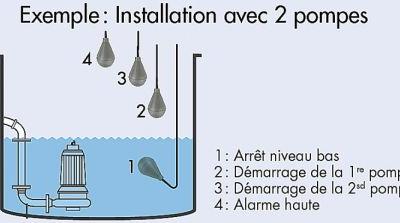
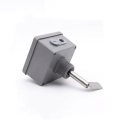
Water level monitoring in water towers is an important aspect to ensure the safety of the structure and the quality of stored water. For this purpose a level switch detects the water level of the tower to keep it constant.
Certain materials and objects can also be at the origin of water quality degradation when they come into contact with it. These degradations can be of organoleptic, physico-chemical or microbiological nature and can generate health risks for consumers.
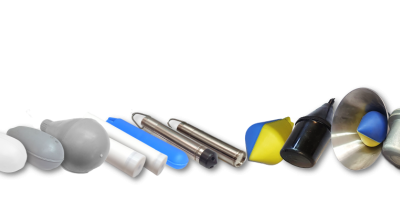
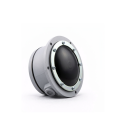
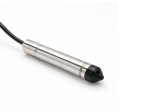
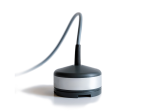
ATMI has developed a range of devices manufactured with special materials ACS certified designed to be used in drinking water for human consumption.
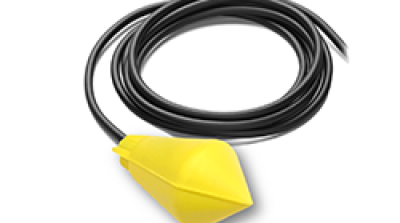
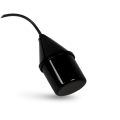
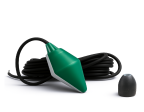
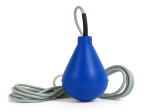
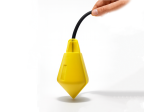
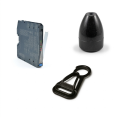
The ACS certified level switch is manufactured with special materials for use in drinking water for human consumption. Indeed, this float level switch has a very large switching angle of 165° and eliminates all risks of jerking on pump motors in drinking water towers.
Discover other float level solutions for drinking water, developed by ATMI.