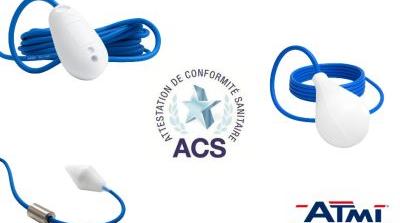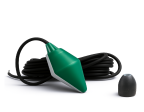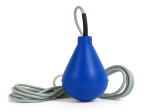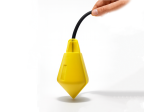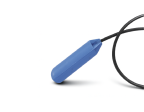

The water that comes out of the tap depends on all the equipment it passes through, or comes into contact with, before being consumed. This is also the case for float level switches, which regulate storage or secure an installation.
When a level detector is installed in an application related to drinking water, it must also be compatible with contact with water intended for human consumption. This is precisely the purpose of the Sanitary Compliance Certificate, better known as ACS certification.
In France, ACS remains today a reference for materials and products that come into contact with drinking water. It assesses the suitability of a product for use in contact with water intended for human consumption, with regard to applicable regulatory provisions. The Ministry of Health states that this proof of sanitary compliance aims to verify that a product can be placed in contact with drinking water without compromising its quality.
Some materials can alter water quality when placed in contact with it. The risk may concern taste, odor, physicochemical composition or microbiological quality of the water, and these elements directly affect public health safety.
French regulations have long required that materials and objects intended to come into contact with drinking water be compatible with the characteristics of that water. The decree of May 29, 1997 establishes this principle of compatibility for materials and objects used in installations for water intended for human consumption.
ACS therefore acts as proof of sanitary compliance. It provides professionals with a framework to verify that a product can be used in a drinking water installation. The ministry also specifies that those responsible for placing products on the market must make available proof of sanitary compliance for the materials or objects concerned, while those responsible for water production, distribution or packaging must verify this proof before implementation.
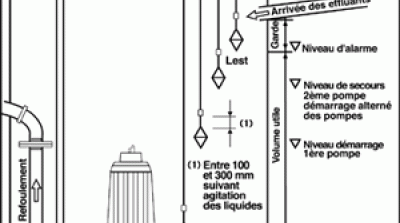
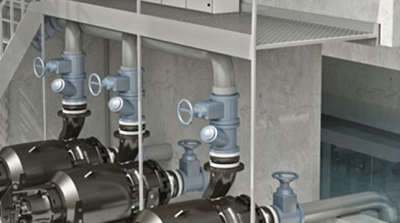
In a pumping station, a float level switch can protect a pump against dry running. In a storage basin, it can help prevent overflow or control filling. In a water tower, it participates in regulating a volume that will subsequently be distributed to users.
In these contexts, the materials used to manufacture a level detector must be suitable for clear consumable water. ACS makes it possible to distinguish a product suitable for drinking water from a product designed for another liquid environment. A float that functions correctly in a clear water tank, in a pit or in a technical basin cannot automatically be considered suitable for a sanitary application. In level measurement, reliability always depends on the match between the product and its actual environment.
ACS certification is part of a French framework. The European Drinking Water Directive, or Directive EU 2020/2184 (DWD), extends this logic to the scale of the European Union. Its objective is to protect human health from the adverse effects of contamination of water intended for human consumption, by ensuring its wholesomeness and cleanliness.
One of the challenges of this directive concerns materials and products in contact with drinking water. Before this European harmonization, manufacturers had to deal with different national systems depending on the country. This situation created gaps in evaluation methods, sanitary requirements and market entry conditions.
The Drinking Water Directive aims to establish a common framework. ECHA, the European Chemicals Agency, explains that starting substances, compositions or constituents used to manufacture materials in contact with drinking water must be listed on European positive lists. These lists concern materials used from the point of abstraction to the tap.
The European framework became more concrete with the publication of several legal acts in 2024. According to ECHA, Article 11 of the Drinking Water Directive sets minimum hygiene requirements for materials in contact with drinking water. This framework was adopted by the European Commission in the form of six legal acts published on April 23, 2024. They notably cover European positive lists, test methods, conformity assessment procedures and harmonized marking.
These texts mark an important evolution for manufacturers because products in contact with drinking water will no longer only be evaluated in a national logic but will progressively enter a structured European system, with common requirements and harmonized marking.
In France, decree No. 2026-80 of February 11, 2026 completes the transposition of Directive EU 2020/2184. This decree concerns materials and products in contact with water intended for human consumption. It provides for a main entry into force on January 1, 2027, with the exception of provisions relating to conformity assessment bodies, applicable from the day following its publication.
It would be too quick to say that an ACS certified product automatically complies with the European Drinking Water Directive. The most accurate formulation is that ACS is part of the continuity of sanitary requirements that the DWD comes to harmonize at the European level.
ACS remains a French proof of sanitary compliance. The DWD establishes a new European framework, which must progressively replace or supplement national systems according to product categories, market entry dates and planned transition periods.
CSTB indicates that from January 1, 2027, for new products placed on the market, ACS will be replaced by a European certificate according to the Drinking Water Directive, called MHR certificate for "Minimum Hygiene Requirement". The same organization specifies that products already evaluated on the French market on December 31, 2026 will benefit from a transition period until December 31, 2032.
This clarification is essential for industrialists because it means that ACS retains an important role in the current period, but manufacturers must anticipate the European switch. For a product already covered by a valid ACS before the end of 2026, the transition is not read the same way as for a new product placed on the market after January 1, 2027.
For manufacturers, distributors, design offices and operators, 2027 marks the beginning of a new European compliance logic for products in contact with drinking water. CSTB recalls that a transition period is planned from January 1, 2027 to move from current national provisions to the new European system, with rules that vary depending on whether the product has already been evaluated or is being placed on the market for the first time.
For industrial players, the challenge is therefore to avoid an overly simplified reading of the subject. ACS is not rendered useless overnight, but it is part of a European trajectory. Affected products will progressively have to adapt to a harmonized framework, in which material traceability, testing, proof of compliance and marking will take an even more structural place.
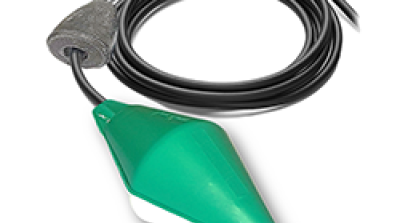
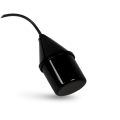
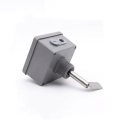
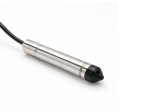
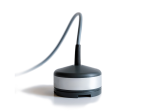
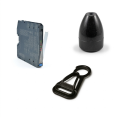
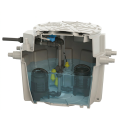
ATMI already offers ACS certified float level switches for applications related to drinking water. The SOBA EP, AQUA MEDIUM EP and AQUA XL EP models meet this logic of sanitary compatibility with water intended for human consumption.
These products show that sanitary compliance influences the choice of materials, float construction and its field of use.
This approach corresponds to ATMI's specialization logic, which has been supporting industrialists in level measurement and control since 1973, with more than 20 types of floats available in over 50 versions. It also highlights an approach based on precise application analysis and listening to needs, in order to recommend solutions adapted to field constraints.
In the case of drinking water, this field analysis becomes even more important. The level to control, tank type, expected function, electrical connection and installation constraints remain essential criteria. But they must be complemented by proof that the product is compatible with contact with water intended for human consumption.
For network operators, installers, integrators and design offices, choosing an ACS certified float level switch contributes to the overall compliance of the installation. An unsuitable product can lead to difficulties during an inspection, but it can above all weaken the sanitary control of distributed water.
The Ministry of Health recalls that those responsible for water production or distribution must ensure that the materials and products used, from the abstraction point to the consumer's tap, comply with regulatory provisions. This responsibility involves verifying proof of sanitary compliance with suppliers before implementing products in contact with drinking water.
In a new project as in a replacement operation, the right reflex is therefore to integrate sanitary compliance from the product selection phase. Waiting until the end of the project to verify this point exposes the installation to costly corrections, delays or avoidable replacements.
For the user, a float level switch remains invisible. It cannot be seen in the kitchen, in the bathroom or when filling a glass of water. However, it can be part of the technical chain that allows drinking water to be stored, regulated and distributed.
This reality reminds us that water quality does not only depend on the treatment carried out in a plant or station. It also depends on the quality of equipment placed along its path. A discrete component can contribute to the overall safety of the installation when properly chosen and compliant with its use.
The European Drinking Water Directive reinforces this interpretation. It seeks to harmonize requirements so that products placed in contact with drinking water meet a common level of safety in the European Union. For users, this harmonization aims to make water protection more consistent, from the abstraction point to the tap.
ACS certification and the Drinking Water Directive attest to the evolution of industrial equipment and a general awareness, both on the operator and consumer side. Their operation has then become just as important as the potential impact they can have on the quality of water intended for human consumption.
ATMI has designed and manufactured level detectors for liquids and solids for over 50 years and we have developed, over the years and through our expertise, equipment capable of meeting the most specific requirements. Concerned with human health, it was obvious for us to develop solutions, consistent with state or EU requirements, for drinking water measurement.
ATMI, level under control.
ATMI FRANCE