
A level detector for solids or a float level switch for liquids does not guarantee reliable information merely by its presence on an installation. Its accuracy depends first on the consistency between the product to be detected and the actual conditions in which it operates. In industry, a level measurement can be skewed without the sensor being defective. The problem often stems from too hasty a choice, mounting that limits device operation, or misreading the initial requirement.
For an operator, incorrect level information can trigger action at the wrong time, cause unnecessary alarms, or provide insufficient equipment protection. That is why the choice must not be limited to a product reference. It must take into account material behavior, the expected threshold, and site constraints. ATMI, manufacturer of level detection solutions, supports this analysis to guide industrial users toward a device consistent with their actual application.
Before choosing a level detector, one must understand precisely what information the installation must obtain. One application may seek to prevent overflow, while another aims primarily to protect a pump from dry running. These two situations may seem similar, but they do not necessarily imply the same setting or the same device positioning.
This step is essential because it avoids a choice based solely on habit or immediate availability. A float level switch can perfectly answer a pump control if its threshold is well defined and its movement remains free. However, it should not be considered an automatic response to all level measurement needs. The right choice thus begins with the function expected from the installation.
A skewed level measurement often appears when expecting from the level detector or the float level switch information it is not designed to provide. A threshold device indicates that a precise point is reached; it does not necessarily give a complete view of level evolution in the container. This difference may seem simple, but it has a direct impact on installation reliability.
In an industrial context, misinterpretation can lead to unnecessary maintenance decisions or mask a real risk. The sensor transmits information, but this information has value only if it corresponds to the initial need. For this reason, the choice of a level detector must be tied to the expected use, then verified against the product to be detected and installation constraints.
The material to be detected directly influences the behavior of the measuring device. A float level switch that works correctly in clear liquid can lose reliability in loaded liquid, especially if deposits hinder float tipping. The issue is therefore not only knowing whether the product is liquid; one must also understand how it behaves in the container and how it can act on the detector over time.
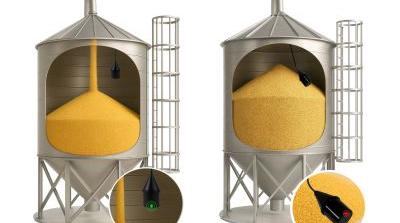
For solids, the analysis differs, as the material does not distribute like a liquid. A level detector for solids must be chosen according to how the product descends in the silo and according to the zone where it exerts presence. Local accumulation can give misleading indication if the detection point is poorly chosen. Material qualification thus remains a major technical step, as it conditions the reliability of the entire detection chain.
Threshold detection allows knowing if a high level or low level has been reached, in order to trigger action on the installation. This type of operation suits many industrial applications, especially when controlling a pump or securing a filling. In this framework, a float switch or a float level switch can provide a simple and reliable answer.
The difficulty appears when this detection is confused with continuous level measurement. A contact does not describe the entire level variation. It signals a state at a defined point. If the industrial user expects more progressive information, the need must be reformulated before choosing equipment. This distinction avoids asking a detector for a function that does not match its design, but also customer frustration.
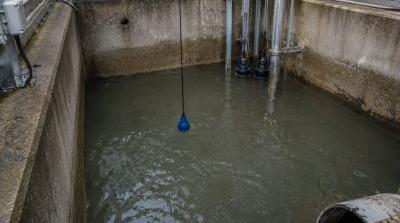
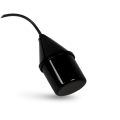
Mounting has a direct influence on transmitted information quality. Even if the level detector or the float level switch is suited to the product, it can trigger too early or too late if its positioning does not respect operating constraints. For a float switch, the cable must allow natural tipping. If the float works too close to a wall, its movement can be limited and the actual threshold no longer matches the planned threshold.
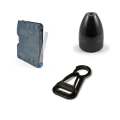
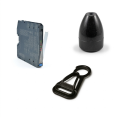
In a silo, reasoning is similar, even if technology changes. A detector placed in a zone where material accumulates in a particular way can indicate presence that does not reflect actual level. The choice of installation point must therefore be treated as a full technical step. Adjustable ballasts on cable can help stabilize a float switch when installation configuration imposes precise positioning.
A level detector rarely works under neutral conditions. The product in contact can stress the cable, while the environment can make control more difficult over time. A solution that seems suitable on paper can lose effectiveness if site constraints have not been integrated from the start. Reliability thus depends on equipment compatibility with the environment in which it is installed.
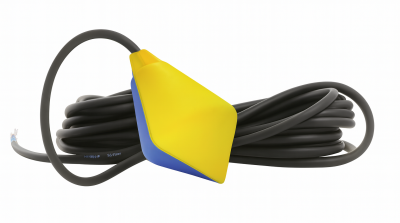
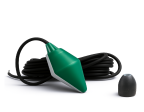
In a liquid application, the choice of cable and float for float level switch must be consistent with the product present in the container. For solids, attention focuses more on device resistance to repeated contact with material. ATMI notably offers float with external ballast, which must be selected according to actual use and not automatic replacement logic.
The price of a level detector for solids or a float level switch for liquids should not be analyzed separately from its usage context. A less costly solution at purchase can become penalizing if it causes mounting rework or frequent interventions. In this case, the actual cost appears during operation, when the installation requires more monitoring than expected or when teams lose confidence in transmitted information.
A professional choice therefore relies on actual use of the level detector. One must assess the consequences of false information and the constraints imposed by the product. For a pump, reliable detection can avoid dry running; for a silo, it can secure filling management. ATMI's role is then to provide a manufacturer's perspective, to guide the choice toward a solution suited to the field rather than a reference retained for convenience.
Liquid applications often rely on devices that use movement of a float level switch. This principle remains effective when the liquid allows the detector to work freely and when the tipping threshold has been correctly defined. The float level switch is thus commonly used for pump controls or threshold alarms, provided their installation respects the actual site configuration.
However, the choice must not be made solely because the application involves a liquid. Clear liquid and loaded liquid do not stress the detector in the same way. The presence of deposits can modify float level switch behavior, while insufficient movement space can shift triggering. That is why analysis of product and mounting remains essential before selecting a solution.
Solid applications require different reading, as material does not form a surface as regular as a liquid. In a silo, the product can accumulate locally or flow irregularly depending on installation configuration. The level detector must therefore be placed at a location that gives representative information, without being influenced by a spot accumulation zone.
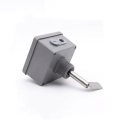
A Rotary paddle level switch can meet certain needs on bulk materials, when technology matches material behavior. The choice must remain tied to the application, as a reliable device in one case can become unsuitable in another. This analysis limits misleading indications and secures level management in the container.
ATMI designs level detection solutions that must be associated with the right usage context. A float level switch, a float switch, or a detector for solids do not answer the same industrial need. Reliability comes from adequacy between the sought function and product behavior, then from the quality of mounting performed on site.
This approach provides a more secure view of level measurement. By correctly qualifying the product and clearly defining the expected threshold, the industrial user reduces false information risks. ATMI brings here a manufacturer consultant value, capable of helping choose a solution consistent with the field and with operational requirements.
Contact ATMI to define together the measurement solution best suited to your needs.
ATMI, level under control